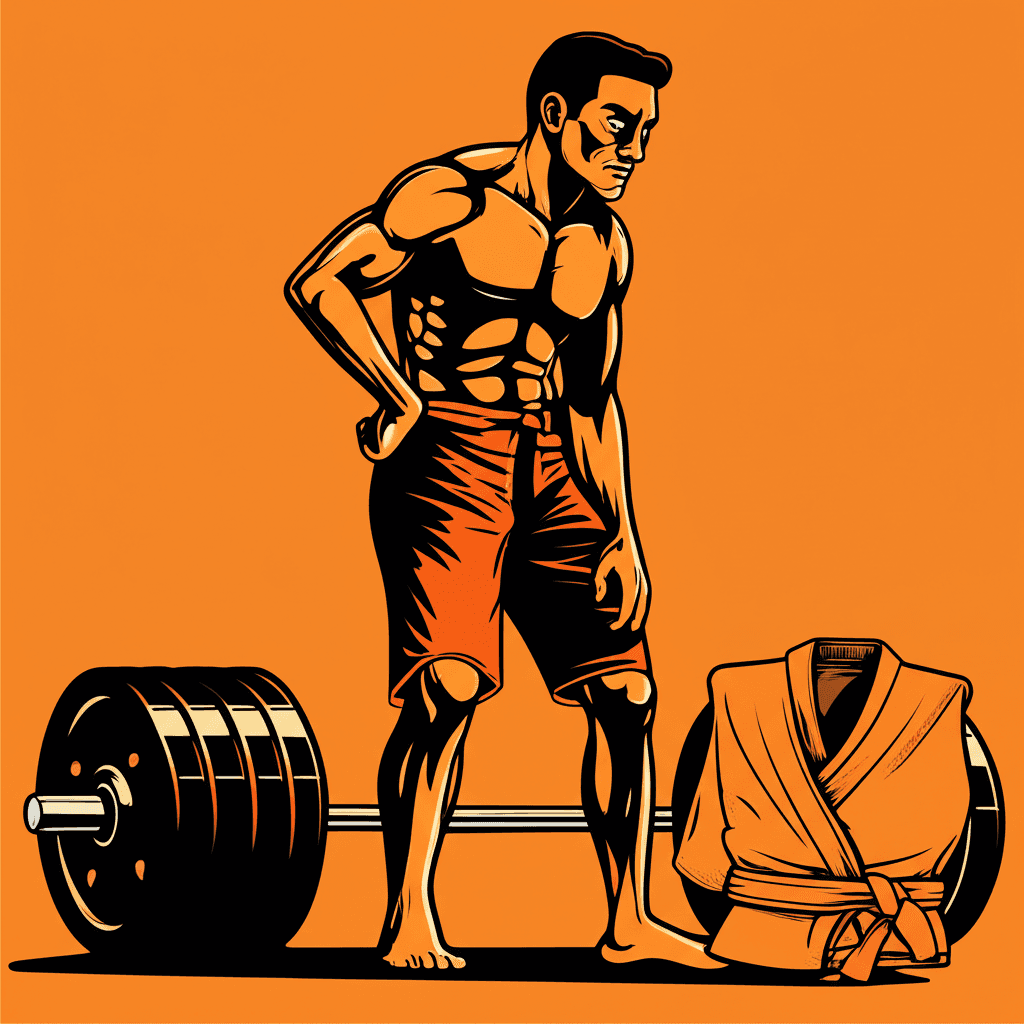
The debate between strength and technique in BJJ is as old as the sport itself. Some say technique conquers all. Others argue that strength is the great equalizer. The truth lies somewhere in the middle.
The Case for Technique
Good technique is undeniably the foundation of effective jiu-jitsu. A technically proficient practitioner can apply leverage and body mechanics to overcome larger, stronger opponents. This is the beauty of BJJ that attracted many of us to the art.
Technique offers several advantages:
- It doesn't fade with age
- It works across all body types
- It's more energy-efficient
- It compounds over time
However, the "technique beats strength" argument has limits.
The Case for Strength
Here's the uncomfortable truth: when technique levels are equal, the stronger person has a significant advantage. Watch high-level competition, and you'll see world-class athletes who are also exceptionally strong and well-conditioned.
Strength provides:
- Finishing power for submissions
- Better control in dominant positions
- Improved injury resistance
- Faster explosive movements
The key is that strength should supplement technique, not replace it.
Finding Your Balance
The optimal balance depends on your current development stage.
White to Blue Belt
Focus: 80% technique, 20% strength
You don't have enough technical knowledge to benefit from extra strength yet. Learn the movements first. Basic strength training (2x per week) is sufficient.
Purple Belt
Focus: 70% technique, 30% strength
Your technique is now developed enough that improved physical attributes will make a noticeable difference. Increase strength training intensity.
Brown to Black Belt
Focus: 60% technique, 40% strength/conditioning
At this level, everyone has solid technique. Physical attributes become a bigger differentiator. Serious strength and conditioning becomes more important.
Practical Implementation
Here's how to add strength training without sacrificing mat time:
For Those Training BJJ 3-4x/Week:
- Lift 2x per week on non-BJJ days
- Focus on compound movements
- Keep sessions under 45 minutes
For Those Training BJJ 5-6x/Week:
- Lift 2-3x per week
- Train before BJJ (if same day)
- Reduce lifting volume during heavy training weeks
The Right Kind of Strength
Not all strength training is equal for BJJ. Focus on:
- Grip strength - For controlling opponents
- Pulling power - Mimics grappling mechanics
- Hip strength - Essential for sweeps and takedowns
- Core stability - Foundational for everything
Avoid training like a bodybuilder. You don't need isolation exercises and pump work. Stick to functional movements.
Warning Signs You're Overtraining
If you're adding strength work, watch for:
- Decreased performance in rolls
- Persistent fatigue
- Increased injuries
- Loss of technique fluidity
These signs mean you need to reduce volume somewhere.
The Bottom Line
The best approach is to work on both continuously. Technique practice should never stop, regardless of your belt level. But intentional strength development accelerates your progress and protects you from injury.
Stop seeing it as either/or. Your goal is to become a technically proficient grappler who is also strong and well-conditioned. That combination is difficult to beat.
Tags
TrainingBJJ Team
TrainingBJJ Team