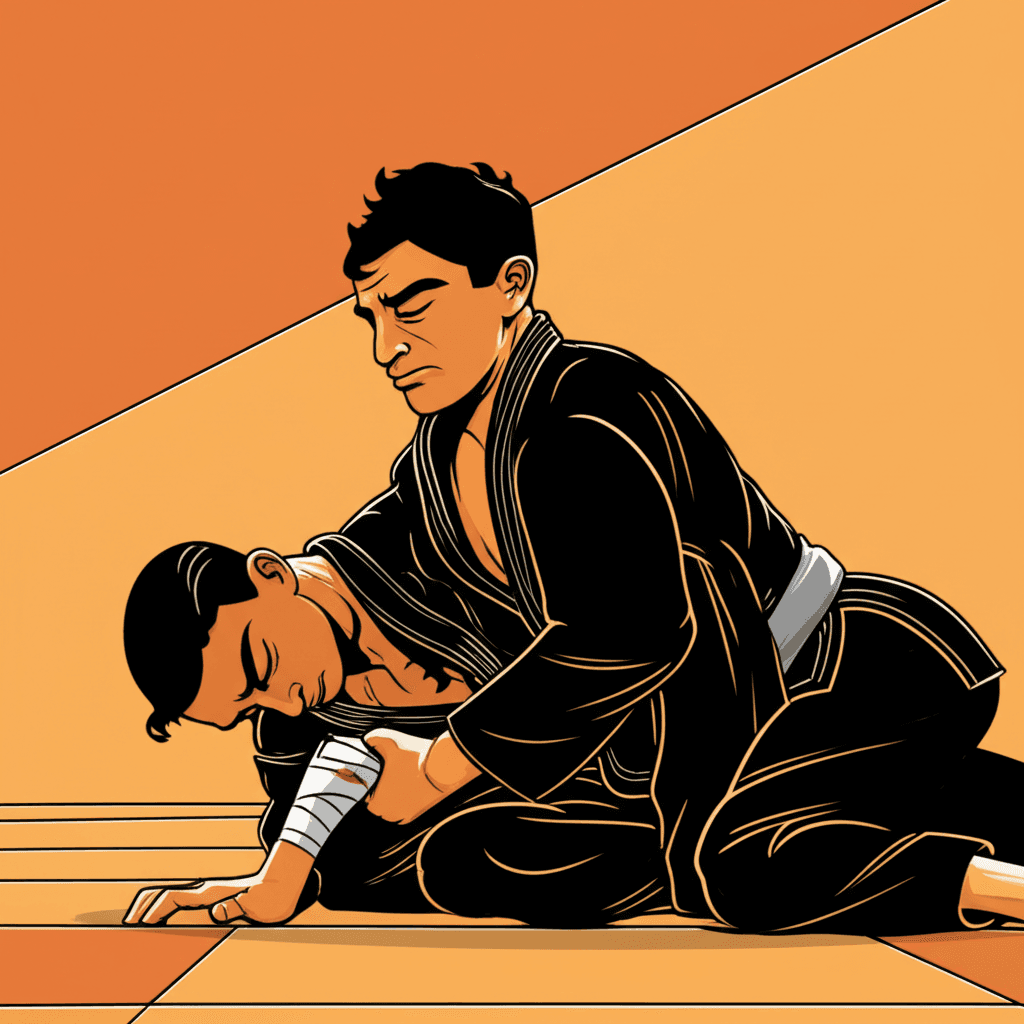
Getting injured doesn't mean you have to stop training entirely. With the right approach, you can continue developing your BJJ while protecting your injury and allowing it to heal.
The Mindset Shift
First, reframe how you think about training with an injury.
Old mindset: "I can't train, I'm injured." New mindset: "I can train differently while I heal."
Many practitioners have accelerated their growth during injury periods because they were forced to focus on areas they previously neglected.
Common Injuries and Training Modifications
Shoulder Injury
What to Avoid:
- Kimura/Americana positions
- Posting on the injured arm
- Stacking pressure
- Gripping with injured side
What You Can Do:
- Work guard retention without grips
- Focus on movement and hip escapes
- Drill submissions that don't involve shoulders
- Watch technique videos extensively
Position Work:
- Bottom side control escapes (careful with underhooks)
- Guard work with legs only
- Mount maintenance and escapes
Knee Injury
What to Avoid:
- Leg locks (giving or receiving)
- Half guard bottom
- Positions that twist the knee
- Kneeling on injured knee
What You Can Do:
- Upper body work from standing or seated
- Drilling from top positions
- Upper body submissions
- Grip fighting and hand fighting
Position Work:
- Top control without knee on belly
- Back control and attacks
- Arm attacks from any position
Finger/Hand Injury
What to Avoid:
- Gi grips
- Grabbing fabric or limbs with injured hand
- Fist-based movements
What You Can Do:
- No-gi training
- Open palm control
- Use forearm control instead of grips
- Focus on positional concepts
Position Work:
- No-gi guard work
- Hooks and leg control
- Head and arm control
Back Injury
What to Avoid:
- Deep stacking
- Heavy lifting during guard retention
- Repeated bridging
- Guard positions that strain lower back
What You Can Do:
- Light flow rolling
- Drilling from standing
- Movement pattern work
- Technical study
Position Work:
- Standing passing drills
- Takedown entries (not full throws)
- Top position maintenance
Creating a Modified Training Plan
Work with your coach to create a training plan that protects your injury.
Step 1: Define Limitations
List exactly what you cannot do:
- Specific movements
- Ranges of motion
- Types of contact
- Positions to avoid
Step 2: Identify What's Possible
List everything you CAN do:
- Positions that don't involve injury
- Techniques that are safe
- Types of training (drilling, flow rolling, watching)
Step 3: Create a Focus
Use this time to develop a specific aspect of your game:
- Perhaps you focus on a guard style you've never explored
- Maybe you develop your top game exclusively
- You might work on mental aspects and game planning
Step 4: Communicate with Partners
Before every roll, tell your partner:
- What your injury is
- What positions/techniques to avoid
- What pace you're comfortable with
- Signal to use if something hurts
The "Other Hand" Technique
When one limb is injured, it's the perfect time to develop your weak side.
For Arm Injuries:
- Become ambidextrous with grips
- Practice same-side techniques on opposite side
- Develop your underhook and overhook game on new side
For Leg Injuries:
- Work your "bad" side for guard retention
- Develop sweeps and hooks from opposite angles
- Build awareness of weight distribution
Mental Training During Injury
Your brain is still available. Use it.
Visualization Practice
Spend 10-20 minutes daily:
- Close eyes and visualize techniques in detail
- "Feel" the weight distribution and pressure
- Run through entire sequences
- Practice mentally responding to common situations
Research shows visualization activates similar brain patterns to physical practice.
Video Study
This is the perfect time for deep technical study:
- Watch high-level competitors
- Study your own competition footage
- Break down techniques frame by frame
- Take detailed notes
Mental Game Development
Work on psychological aspects:
- Breathing techniques for staying calm
- Focus training for competition
- Game plan development
- Pre-competition mental routines
Returning to Full Training
Don't rush back. Follow this progression:
Week 1-2: Light drilling only
- 50% effort
- Controlled partners
- Stop at first sign of pain
Week 3-4: Add flow rolling
- Still controlled
- Communicate constantly
- Gradually increase intensity
Week 5+: Return to normal training
- Start with trusted partners
- Full intensity only when confident
- Continue rehabilitation exercises
Injury as Opportunity
Many successful grapplers credit injuries with forcing them to improve:
- A shoulder injury might develop your leg lock game
- A knee injury could make you a better top player
- A hand injury might teach you superior body control
The key is attitude. See this as a different kind of training, not a pause in your development.
Prevention While Healing
Use this time to build injury prevention habits:
- Develop a proper warm-up routine
- Add mobility work to your daily practice
- Start a strength program for when you return
- Learn proper tapping and positioning
When you return to full training, you'll be more injury-resistant than before.
Final Thoughts
An injury doesn't end your training—it changes it. Approach this period with curiosity and creativity. The practitioners who continue growing during setbacks often emerge stronger than those who simply wait for healing.
Stay engaged, modify smartly, and trust the process.
Tags
TrainingBJJ Team
TrainingBJJ Team